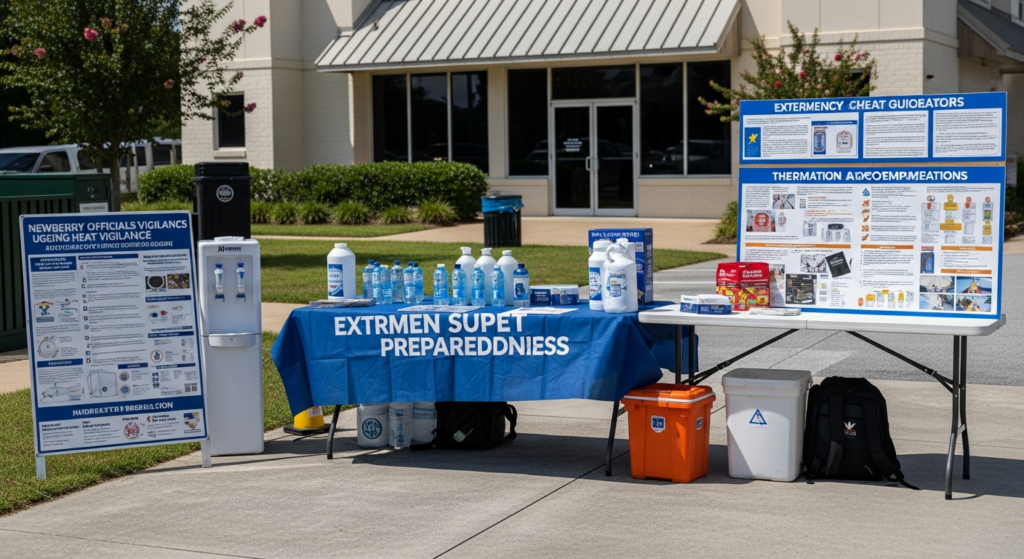
Newberry public health authorities have reissued comprehensive guidance on extreme heat safety, advising residents on preparedness, hydration, and emergency response as the region experiences sustained high temperatures. The recommendations underscore the serious public health threat posed by extreme heat events, which are defined as a series of hot days significantly above average for the time of year. Such events are responsible for more fatalities than any other weather phenomenon, and scientific consensus indicates that the climate crisis is contributing to their increased frequency, severity, and duration.
Central to the guidance is the critical importance of proper hydration. An average person requires approximately three-quarters of a gallon of water daily, a baseline that increases significantly during periods of intense heat. Emergency preparedness kits should include at least one gallon of drinking water per person per day. The guidance specifically cautions against consuming sugary drinks, caffeinated beverages, and alcohol, as these can contribute to dehydration. For individuals experiencing heavy sweating, replacing lost salt and minerals through snacks or sports drinks is advised to maintain electrolyte balance.
Beyond immediate hydration, the guidance details essential emergency supplies for both short-term and extended heat events. A “Go-Kit” is recommended for portable, three-day supplies, while a “Stay-at-Home Kit” should contain enough provisions to last at least two weeks. Critical items include a one-month supply of any necessary medications, stored in child-proof containers, along with other medical supplies or equipment. Backup batteries and chargers for electronic devices are also crucial. For outdoor protection, sunscreen and wide-brimmed hats are listed as vital components of a heat-ready kit.
Effective cooling strategies are another cornerstone of the safety advice. Spending several hours each day in an air-conditioned environment is strongly recommended. The guidance explicitly states that electric fans alone are insufficient for cooling when temperatures climb into the high 90s. When home air conditioning is unavailable or inadequate, residents are encouraged to utilize public spaces such as the Newberry County Library or local shopping malls along US-76 as temporary cooling centers. Wearing lightweight, loose-fitting clothing can also help the body regulate temperature. Limiting outdoor activity, or scheduling any necessary outdoor work for the cooler parts of the day, such as early morning or late evening, is also emphasized.
Certain populations face a heightened risk of heat illness. This includes older adults, infants, young children, and pregnant women. Individuals with pre-existing medical conditions are also particularly vulnerable. Outdoor workers, including those employed at major Newberry manufacturing facilities like Kraft Heinz, Samsung Electronics America, Georgia-Pacific, and Komatsu America, are at significant risk due to prolonged exposure. People with limited personal resources, who may lack access to air conditioning or adequate hydration, and those living in areas with fewer green spaces, which tend to be hotter, also require special attention.
Recognizing the symptoms of heat-related illnesses is vital for timely intervention. Heat cramps, the mildest form, are characterized by heavy sweating accompanied by muscle pain or spasms. Heat exhaustion presents with more severe symptoms, including heavy sweating, cold, pale, and clammy skin, a fast and weak pulse, nausea or vomiting, cramps, general weakness, dizziness, headache, or fainting. The most severe condition, heat stroke, is a medical emergency. Its symptoms include a dangerously high body temperature of 104°F or higher, hot, red, dry or damp skin, a fast and strong pulse, headache, dizziness, nausea, confusion, or loss of consciousness.
In cases of suspected heat stroke, immediate action is critical. The guidance instructs individuals to call 911 without delay. While awaiting emergency medical services, move the affected person to a cool location. Begin cooling the body using wet cloths, misting, fanning, or a cool bath. It is crucial not to give the person anything to drink. For those experiencing emotional distress following an extreme heat event, the Disaster Distress Helpline, available at 1-800-985-5990, offers free calls or texts for support.
Why it matters in Newberry
The comprehensive heat safety guidance is particularly relevant for Newberry, where the summer months often bring sustained periods of high temperatures. The well-being of the community, from students returning to classes in the School District of Newberry County to employees working at local manufacturing plants, hinges on understanding and implementing these precautions. Newberry County Memorial Hospital serves as a critical local resource, prepared to address heat-related emergencies, but proactive measures can significantly reduce the burden on healthcare services and ensure the safety of all residents. Adherence to these guidelines helps protect the most vulnerable populations in neighborhoods like Gallman Place and Forest Ridge, fostering a more resilient community response to environmental challenges.