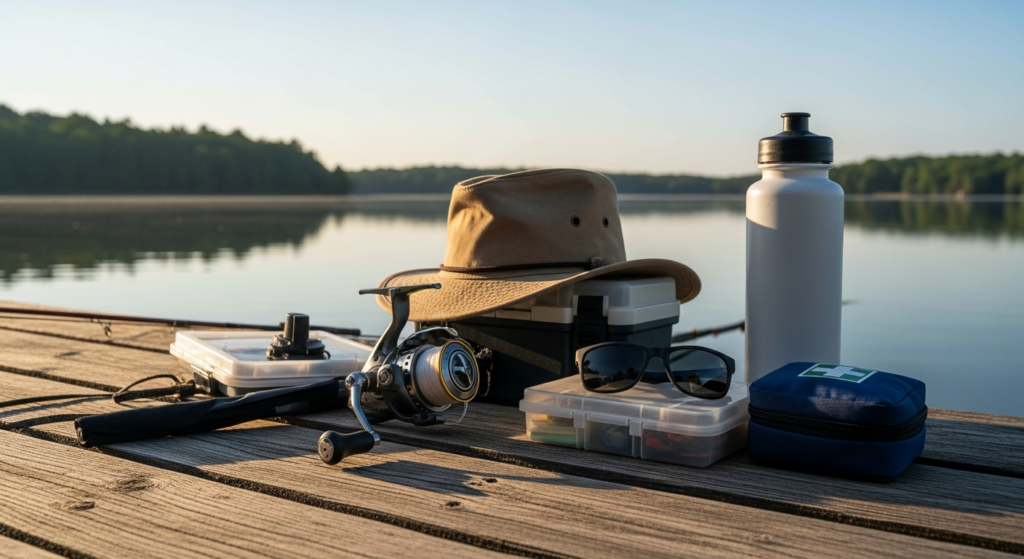
As summer fishing activity continues across Newberry County, a comprehensive safety guide has been issued, urging anglers to adopt critical precautions against the season’s inherent risks. The recommendations focus on mitigating exposure to intense sun, preventing dehydration, recognizing heat-related illnesses, and maintaining equipment under demanding conditions.
One of the primary concerns for anglers is the sun’s intense ultraviolet (UV) radiation. The guide highlights that the sun’s rays are strongest between 10 AM and 4 PM, a period when many fishing excursions are underway. Adding to this risk, water surfaces can reflect up to 15% of UV radiation, effectively increasing exposure. To counter this, broad-spectrum sunscreen with an SPF (Sun Protection Factor) of at least 30 is recommended for general use, with an SPF of 50+ advised for individuals anticipating extended periods on the water. Proper application involves applying sunscreen 30 minutes before sun exposure and reapplying it every two hours, or more frequently if sweating heavily or after splashing in water.
Beyond topical protection, the guide advocates for specific clothing choices. Lightweight, long-sleeved UPF-rated clothing offers a physical barrier against UV rays. A wide-brimmed hat, providing at least four inches of coverage, is crucial for protecting the face, ears, and neck. Polarized sunglasses with 100% UV protection are also essential, not only to improve visibility by reducing glare but also to shield the eyes from harmful radiation.
Hydration is another cornerstone of summer safety. Anglers are advised to drink at least eight ounces of water every 15 to 20 minutes, particularly during active fishing. The guide explicitly warns against beverages high in caffeine or alcohol, as these can accelerate dehydration, counteracting efforts to stay hydrated. Maintaining consistent fluid intake is vital for preventing the onset of heat-related conditions.
The guide details the symptoms of heat exhaustion and heat stroke, emphasizing the importance of early recognition. Signs of heat exhaustion include heavy sweating, general weakness, nausea, headaches, and muscle cramps. If these symptoms appear, individuals should seek shade, rest, and rehydrate immediately. Heat stroke, a more severe and life-threatening condition, is characterized by a body temperature above 103°F, an altered mental state (confusion, irritability), hot and dry skin (though sweating may still be present), a rapid pulse, and potential unconsciousness. Heat stroke requires immediate medical attention, and calling emergency services is paramount.
For those fishing from boats on Newberry’s larger bodies of water, such as Lake Murray, Parr Reservoir, or Lake Monticello, additional precautions are recommended. Checking the engine cooling system before departure is crucial to prevent breakdowns. Filing a float plan with a trusted contact, detailing the intended route and return time, provides a safety net. Carrying extra water and emergency supplies, including a VHF radio for communication, is also advised. A critical emergency provision is at least one gallon of water per person per day, reserved solely for unforeseen circumstances.
Equipment care also warrants attention during the summer months. Fishing gear, particularly rods and reels, should be protected from direct sunlight when not in use. Heat and UV exposure can significantly weaken monofilament and fluorocarbon fishing lines, necessitating more frequent checks for signs of degradation. The guide suggests considering braided lines, which tend to exhibit greater UV resistance, as a more durable alternative for summer fishing.
Why it matters in Newberry
These summer fishing safety guidelines are particularly relevant for Newberry residents and visitors, given the popularity of fishing on local waterways like the Saluda River, Bush River, Enoree River, and the expansive Lake Murray. With numerous recreational opportunities available at places like Lynch’s Woods Park and Hidden Lake Recreation Complex, understanding and implementing these precautions can significantly reduce the risk of heat-related illnesses and accidents. Newberry County Memorial Hospital, as a key healthcare provider in the area, often sees an increase in heat-related emergencies during the summer. Adhering to these recommendations not only protects individual anglers but also helps ensure that Newberry’s natural assets can be enjoyed safely throughout the warmer months, minimizing strain on local emergency services and healthcare resources.