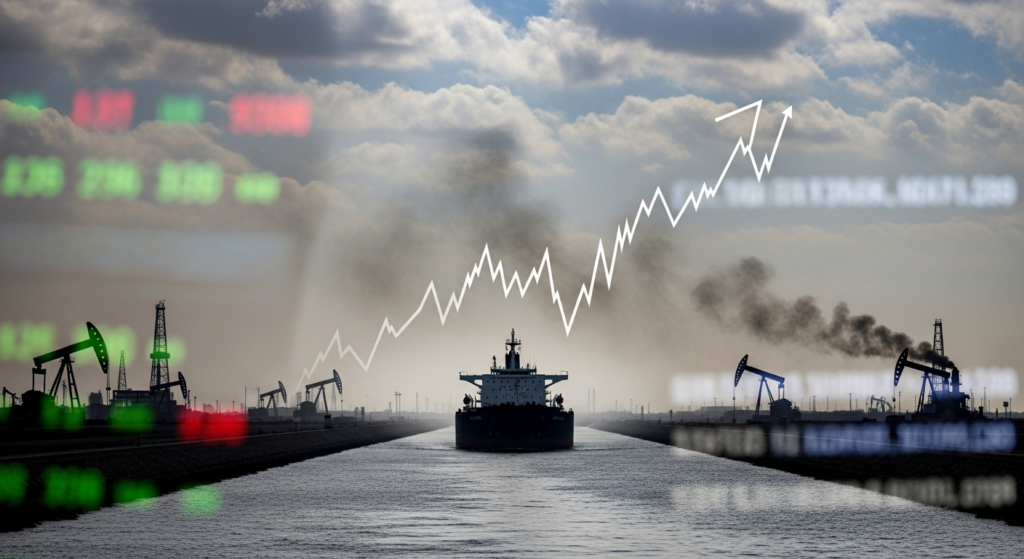
Global oil and stock markets have reacted to renewed tensions surrounding the Strait of Hormuz, with investors weighing the risks of shipping disruptions and potential conflict in the vital waterway. The developments, tied to concerns over oil supply, have led to shifts in equity and crude prices, signaling potential economic ripples that could extend to communities like Newberry.
The Strait of Hormuz, a narrow passage connecting the Persian Gulf to the open ocean, is a critical chokepoint for global oil shipments. Any instability there can significantly impact crude oil prices, which in turn affect a wide range of industries and consumer costs worldwide. Market reports indicate that the increased geopolitical risk has prompted a cautious stance among investors, leading to fluctuations across financial sectors.
For Newberry, the primary impact of rising oil prices would likely be felt at the gas pump and within the logistics sector. Commuters traveling along I-26, US-76, and SC-34 could face higher fuel costs, directly affecting household budgets. Businesses that rely on transportation, from local delivery services to regional freight carriers, may also see their operating expenses increase, potentially leading to higher prices for goods and services.
Newberry’s robust manufacturing base, including major employers like Kraft Heinz, Samsung Electronics America, Georgia-Pacific, and Komatsu America, could also experience indirect effects. These companies often depend on complex global supply chains for raw materials and the distribution of finished products. Increased shipping costs or potential delays stemming from international oil market volatility could impact production costs and efficiency.
Small businesses operating along commercial corridors such as US-76 and SC-34 may also find their margins squeezed by elevated energy costs. From local retailers to service providers, the ripple effect of higher fuel and transportation expenses can translate into increased operational overhead. Similarly, institutions like the School District of Newberry County and Newberry College could face higher costs for fleet operations or utilities, potentially impacting their budgets.
While the immediate effects in Newberry are not yet fully quantifiable, the global market reactions underscore the interconnectedness of the world economy. Local businesses and consumers often absorb the downstream effects of international events, making vigilance regarding energy prices and supply chain stability a continuous necessity.
### Why it matters in Newberry
The global market volatility stemming from tensions in the Strait of Hormuz carries tangible implications for Newberry. Major employers such as Kraft Heinz and Samsung Electronics America, cornerstones of the local economy, rely on stable global supply chains and predictable energy costs to maintain their operations and competitiveness. Any sustained increase in oil prices could translate into higher input costs for these manufacturers, potentially influencing local employment and investment decisions. Moreover, for the thousands of residents who commute daily or rely on local transportation services, rising gas prices directly impact disposable income and household budgets. The broader economic health of Newberry, from its small businesses to its educational institutions like Newberry College, is sensitive to these external pressures, highlighting how international events can directly shape daily life in the community.